
Class 10 Social Question and Answer: Collective Behaviour and Protests
Looking for SSLC Class 10 Social Science Studies textbook answers? You can download Chapter 3: Collective Behaviour and Protests Questions and Answers PDF, Notes, and Additional Q&A here. SSLC Social Science solutions follow the Karnataka State Board Syllabus, making it easier for students to revise and score higher in exams.
Karnataka SSLC Social Sociology Textbook Answers—Reflections Chapter 3
Collective Behaviour and Protests Questions and Answers, Notes, and Additional Q&A
Class 10 Sociology Chapter 3
Collective Behaviour and Protests
Scroll Down to Download Collective Behaviour and Protests PDF
I. Fill in the blanks with suitable words.
- The Chipko movement took place in Uttarakhand State.
- The leader of the Narmada agitation is Medha Patkar.
- Shivaram Karanth agitated against the Kaiga Nuclear Power Station.
II. Answer the following in one sentence each:
Question 1.
What is collective behaviour?
Answer:
Collective behaviour is the thoughts, feelings and actions of a large number of people who come together, often without prior planning.
Question 2.
Who is the leader of the Chipko movement?
Answer:
Shri Sunderlal Bahuguna and Shri Chandi Prasad Bhatt were the leaders of the Chipko movement.
Question 3.
What is a self-help group?
Answer:
A self-help group is a group formed by people based on mutual trust and cooperation to achieve economic and social empowerment.
Question 4.
What is the labour movement?
Answer:
The labour movement is a movement organised by labour organisations to protect workers’ interests and uphold their dignity.
III. Answer the following in two or three sentences.
Question 1.
What does collective behaviour include?
Answer:
Collective behaviour includes mobs, rumours, propaganda, public opinion, revolutions and social movements. It refers to the thoughts, feelings and actions of people who come together.
Question 2.
What is a mob? Give examples.
Answer:
A mob is a temporary assembly of people who gather around a common interest without prior planning. Examples include people gathering near a theatre to buy tickets or assembling at the scene of an accident.
Question 3.
Describe the nature of a mob.
Answer:
A mob is a temporary gathering of people at a specific place. Its members can be easily influenced by mutual feelings, opinions and actions, and sometimes their behaviour may become violent.
Question 4.
Describe the meaning and nature of environmental pollution.
Answer:
Environmental pollution is the contamination of soil, air, water and the biosphere by harmful substances and chemicals. Population growth, industrialisation, urbanisation and the expansion of transport systems are major causes of environmental pollution.
Question 5.
Explain the importance of women’s self-help groups.
Answer:
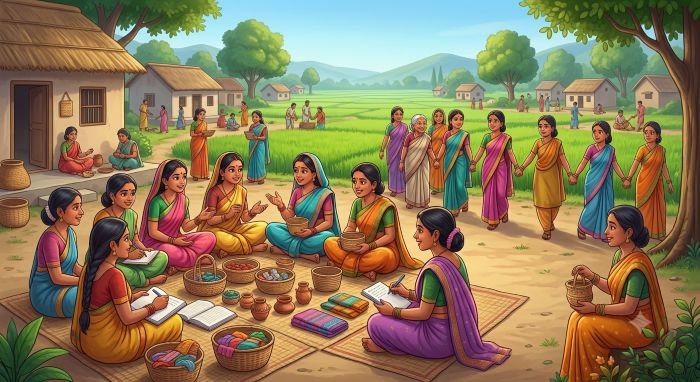
Women’s self-help groups empower women economically and socially through mutual trust and cooperation. They help women gain equal rights, opportunities and independence by encouraging savings, income-generating activities and collective efforts.
Additional Questions and Answers
Question 1.
What is a riot?
Answer:
A riot is a violent and destructive form of mob behaviour that causes damage to property and may result in loss of lives.
Question 2.
What was the main objective of the Appiko Movement?
Answer:
The main objective of the Appiko Movement was to stop the cutting of trees, prevent the smuggling of timber and create awareness about environmental protection.
Question 3.
Who were the leaders of the Narmada Bachao Andolan?
Answer:
Medha Patkar and Baba Amte were the leaders of the Narmada Bachao Andolan.
Question 4.
What is the main aim of the anti-untouchability movement?
Answer:
The main aim of the anti-untouchability movement is to end untouchability, caste-based discrimination and social oppression against Dalits.
Question 5.
What was the purpose of the Chipko Movement?
Answer:
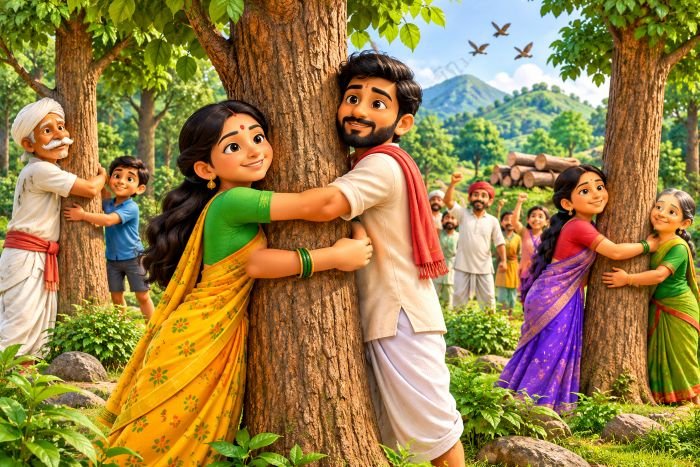
The purpose of the Chipko Movement was to protect trees and forests by hugging trees and preventing them from being cut down.
Question 6.
What is the importance of labour movements?
Answer:
Labour movements protect workers’ rights, improve their working conditions and uphold their dignity against exploitation.
Multiple-Choice Questions (MCQs)
1. The Chipko Movement took place in which state?
A) Karnataka
B) Uttarakhand
C) Kerala
D) Tamil Nadu
Answer:
B) Uttarakhand
2. Who were the leaders of the Narmada Bachao Andolan?
A) Mahatma Gandhi and Jawaharlal Nehru
B) Jyotirao Phule and Periyar
C) Medha Patkar and Baba Amte
D) Sunderlal Bahuguna and Dr. B. R. Ambedkar
Answer:
C) Medha Patkar and Baba Amte
3. The Appiko Movement started in which year?
A) 1973
B) 1980
C) 1983
D) 1990
Answer:
C) 1983
4. Who led the anti-untouchability movement through his thoughts and struggles?
A) Dr. B. R. Ambedkar
B) Sardar Vallabhbhai Patel
C) Subhas Chandra Bose
D) Bal Gangadhar Tilak
Answer:
A) Dr. B. R. Ambedkar
5. What is a temporary assembly of people around a common interest called?
A) Labour union
B) Mob
C) Self-help group
D) Social organisation
Answer:
B) Mob
6. The Appiko Movement was started in which district of Karnataka?
A) Mysuru
B) Bengaluru
C) Uttara Kannada
D) Dakshina Kannada
Answer:
C) Uttara Kannada
7. Who started the Self-Respect Movement in 1925?
A) Jyotirao Phule
B) E. V. Ramaswamy Naicker (Periyar)
C) Baba Amte
D) Sunderlal Bahuguna
Answer:
B) E. V. Ramaswamy Naicker (Periyar)
8. Which of the following is an example of a women’s movement?
A) Alcohol prohibition movement
B) Chipko Movement
C) Appiko Movement
D) Silent Valley Movement
Answer:
A) Alcohol prohibition movement
9. The peasant rebellion at Naragunda took place in which year?
A) 1972
B) 1975
C) 1980
D) 1983
Answer:
C) 1980
10. Which movement was organised to protect the environment in Kerala’s Silent Valley?
A) Farmer’s Movement
B) Silent Valley Movement
C) Labour Movement
D) Self-Respect Movement
Answer:
B) Silent Valley Movement
11. Who led the Chipko Movement along with Sunderlal Bahuguna?
A) Medha Patkar
B) Chandi Prasad Bhatt
C) Baba Amte
D) Periyar
Answer:
B) Chandi Prasad Bhatt
12. Which movement opposed the construction of a dam across the Narmada River?
A) Appiko Movement
B) Chipko Movement
C) Narmada Bachao Andolan
D) Silent Valley Movement
Answer:
C) Narmada Bachao Andolan
13. Which of the following is a major cause of environmental pollution?
A) Afforestation
B) Industrialisation
C) Wildlife protection
D) Rainwater harvesting
Answer:
B) Industrialisation
14. Which organisation plays an important role in protecting workers’ interests?
A) Labour unions
B) Self-help groups
C) Environmental groups
D) Youth clubs
Answer:
A) Labour unions
15. Which magazine was started by Dr. B. R. Ambedkar?
A) Kesari
B) Mooknayak
C) Young India
D) Harijan
Answer:
B) Mooknayak
16. The Stree Shakti Yojana promotes the empowerment of whom?
A) Farmers
B) Industrialists
C) Women
D) Students
Answer:
C) Women
17. Which movement opposed the proposed nuclear power generation centre at Kaiga in Karnataka?
A) Environmental movement
B) Labour movement
C) Women’s movement
D) Anti-untouchability movement
Answer:
A) Environmental movement
18. Who established the Karnataka State Farmers’ Association, according to the chapter?
A) M. D. Nanjundaswamy
B) Baba Amte
C) Chandi Prasad Bhatt
D) E. V. Ramaswamy Naicker
Answer:
A) M. D. Nanjundaswamy
19. What is the main purpose of the anti-untouchability movement?
A) To promote industrial growth
B) To protect forests
C) To end caste-based discrimination
D) To increase agricultural production
Answer:
C) To end caste-based discrimination
20. Which of the following is an example of collective behaviour organised to bring social change?
A) Social movement
B) Individual study
C) Personal hobby
D) Private conversation
Answer:
A) Social movement