
Class 10 Social Question and Answer: The First War Of Indian Independence (1857)
Looking for SSLC Class 10 Social Science Studies textbook answers? You can download Chapter 1: The First War Of Indian Independence (1857) Questions and Answers PDF, Notes, and Additional Q&A here. SSLC Social Science solutions follow the Karnataka State Board Syllabus, making it easier for students to revise and score higher in exams.
Karnataka SSLC Social History Textbook Answers—Reflections Chapter 6
The First War Of Indian Independence (1857) Questions and Answers, Notes, and Additional Q&A
Class 10 History Chapter 6
The First War Of Indian Independence (1857)
Scroll Down to Download The First War Of Indian Independence (1857) PDF
I. Fill in the blanks with suitable words:
- British historians refer to the 1857 revolt as The Sepoy Mutiny.
- During the 1857 revolt, at Barrackpore, a British officer was killed by Mangal Pandey.
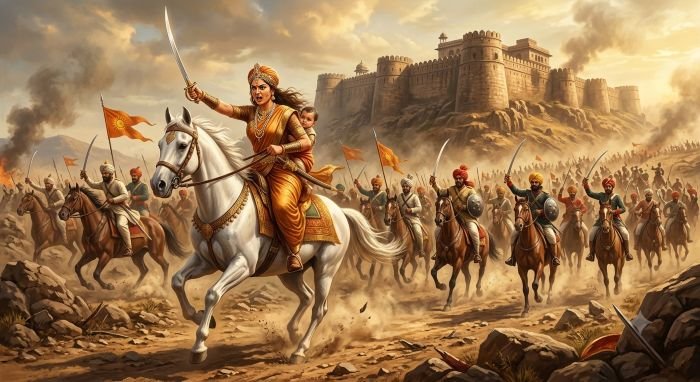
- Jhansi Rani fought against the British and took Gwalior under her control.
- The declaration passed by the British Queen in 1858 is called India’s Magna Carta.
II. Discuss the following in groups and answer them:
Question 1.
The political factors inspired the revolt of 1857. How?
Answer:
The British introduced the Doctrine of Lapse and the Subsidiary Alliance to expand their rule in India. They annexed several kingdoms, including Satara, Jhansi and Udaipur. Dalhousie cancelled the princely titles of the Nawabs of Tanjore and Carnatic. The Mughal emperor and the Nawab of Oudh were also dethroned. As a result, many rulers and their soldiers became dissatisfied with British rule, which led to the revolt of 1857.
Question 2.
The economic changes of the time were responsible for the 1857 revolt. How?
Answer:
The Industrial Revolution in England led to the decline of Indian handicrafts and cottage industries, leaving many craftsmen unemployed. The British imposed heavy taxes on Indian goods sold in England. The Zamindari system led to the exploitation of farmers, while the Inam Commission confiscated gifted lands without proper documents. These economic hardships caused dissatisfaction among craftsmen, farmers and landlords, contributing to the revolt of 1857.
Question 3.
What were the factors that disturbed the religious sentiments of the soldiers during the 1857 revolt?
Answer:
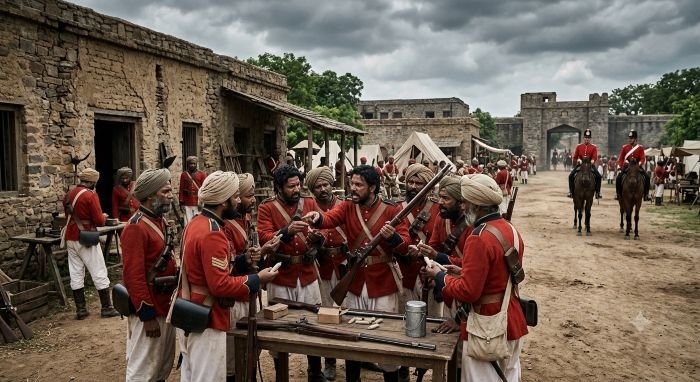
The religious sentiments of Indian soldiers were disturbed when they were forced to cross the oceans to serve in foreign lands. The immediate cause was the rumour that the cartridges used in the new Royal Enfield rifles were greased with cow and pig fat. Cows were sacred to Hindus, while pigs were forbidden to Muslims. This hurt the religious sentiments of both Hindu and Muslim soldiers and led to the revolt of 1857.
Question 4.
What was the immediate cause for the First War of Independence?
Answer:
The immediate cause of the First War of Independence in 1857 was the rumour that the cartridges used in the new Royal Enfield rifles were greased with cow and pig fat. Soldiers had to bite the cartridges to use them. This hurt the religious sentiments of Hindu and Muslim soldiers, leading to their revolt against the British.
Question 5.
Make a list of the reasons for the failure of the revolt.
Answer:
The reasons for the failure of the revolt of 1857 were:
- The revolt did not spread throughout the country.
- There was no proper leadership or direction.
- The Indian soldiers lacked unity, discipline and proper planning.
- The British forces were better organised and united.
- Many provincial kings supported the British instead of the rebels.
- The revolt lacked proper strategy and military expertise.
- The people lost confidence in the soldiers due to arson and looting.
Question 6.
What were the features of the declaration of the British Queen in 1858?
Answer:
The main features of the British Queen’s declaration in 1858 were:
- The agreements made by the British East India Company with Indian kings were accepted.
- The British gave up their ambitious plans for territorial expansion.
- A stable government was promised to the Indians.
- Equality before the law was assured.
- Religious tolerance was promised, and the government would not interfere in the religious matters of the people.
- The administration of India was transferred from the British East India Company to the British Crown.
Additional Questions and Answers
Question 1.
What is meant by the Doctrine of Lapse?
Answer:
The Doctrine of Lapse was a policy introduced by the British to annex kingdoms when a ruler died without a natural heir.
Question 2.
What was the Inam Commission?
Answer:
The Inam Commission was appointed by the British to investigate gifted lands. Lands without proper documents were confiscated.
Question 3.
Why were Indian craftsmen affected during British rule?
Answer:
The Industrial Revolution in England caused Indian handicrafts and cottage industries to decline. Many Indian craftsmen lost their jobs.
Question 4.
What were the conditions of Indian soldiers in the British army?
Answer:
Indian soldiers were given lower salaries, fewer opportunities for promotion and lower status compared with British soldiers.
Question 5.
Who was Mangal Pandey?
Answer:
Mangal Pandey was an Indian soldier who revolted against the British at Barrackpore and killed a British officer. He was later arrested and hanged.
Question 6.
Why did the revolt begin at Meerut?
Answer:
Indian soldiers at Meerut refused to use the greased cartridges. They were imprisoned, which led to a revolt by the soldiers.
Question 7.
Who was declared the Emperor of India during the revolt?
Answer:
Bahadur Shah II was declared the Emperor of India by the rebel soldiers.
Question 8.
Who led the revolt at Kanpur?
Answer:
Nana Saheb led the revolt at Kanpur, with Tatya Tope as his assistant.
Question 9.
Who led the revolt at Jhansi?
Answer:
Queen Rani Laxmibai led the revolt at Jhansi against the British.
Question 10.
What happened to Rani Laxmibai during the revolt?
Answer:
Rani Laxmibai fought bravely against the British and laid down her life during the battle.
Question 11.
What was one major effect of the revolt of 1857?
Answer:
The administration of India was transferred from the British East India Company to the British Crown.
Question 12.
Why is the Queen’s declaration of 1858 called India’s Magna Carta?
Answer:
It promised equality before law, religious tolerance, protection of agreements with Indian rulers and a stable government for Indians.
Multiple-Choice Questions (MCQs)
1. The British historians called the revolt of 1857:
a) Civil War
b) Sepoy Mutiny
c) Peasant Revolt
d) Freedom Movement
Answer:
b) Sepoy Mutiny
2. Who introduced the Doctrine of Lapse?
a) Lord Curzon
b) Lord Dalhousie
c) Lord Wellesley
d) Lord Canning
Answer:
b) Lord Dalhousie
3. The immediate cause of the revolt was related to:
a) Heavy taxes
b) Inam Commission
c) Greased cartridges
d) Zamindari system
Answer:
c) Greased cartridges
4. The cartridges were believed to be greased with the fat of:
a) Cows and pigs
b) Sheep and goats
c) Buffaloes and cows
d) Horses and pigs
Answer:
a) Cows and pigs
5. Mangal Pandey revolted at:
a) Meerut
b) Delhi
c) Barrackpore
d) Kanpur
Answer:
c) Barrackpore
6. Who was declared the Emperor of India by the rebel soldiers?
a) Nana Saheb
b) Bahadur Shah II
c) Tatya Tope
d) Lord Canning
Answer:
b) Bahadur Shah II
7. Who led the revolt at Kanpur?
a) Nana Saheb
b) Rani Laxmibai
c) Bahadur Shah II
d) Mangal Pandey
Answer:
a) Nana Saheb
8. Rani Laxmibai was the queen of:
a) Kanpur
b) Lucknow
c) Jhansi
d) Delhi
Answer:
c) Jhansi
9. Who assisted Nana Saheb during the revolt?
a) Bahadur Shah II
b) Tatya Tope
c) Lord Dalhousie
d) Mangal Pandey
Answer:
b) Tatya Tope
10. The administration of India was transferred to the British Crown in:
a) 1856
b) 1857
c) 1858
d) 1860
Answer:
c) 1858
11. The declaration of 1858 is known as India’s:
a) Magna Carta
b) Constitution
c) Charter Act
d) Bill of Rights
Answer:
a) Magna Carta
12. The revolt of 1857 failed partly because:
a) All Indians supported it
b) There was no proper unity and leadership
c) The British had no army
d) It spread throughout India
Answer:
b) There was no proper unity and leadership