
Class 10 Social Question and Answer: India – Mineral and Power Resources
Looking for SSLC Class 10 Social Science Studies textbook answers? You can download Chapter 7: India – Mineral and Power Resources Questions and Answers PDF, Notes, and Additional Q&A here. SSLC Social Science solutions follow the Karnataka State Board Syllabus, making it easier for students to revise and score higher in exams.
Karnataka SSLC Social Geography Textbook Answers—Reflections Chapter 7
India – Mineral and Power Resources Questions and Answers, Notes, and Additional Q&A
Class 10 Geography Chapter 7
India – Mineral and Power Resources
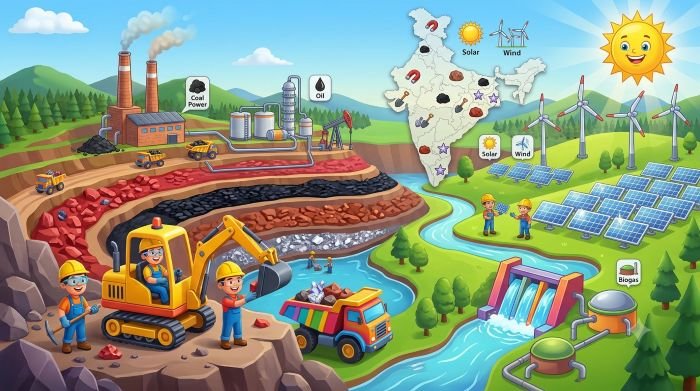
Scroll Down to Downlaod India – Mineral and Power Resources PDF
I. Fill in the blanks with suitable words:
- The wonder metal of the 20th century is Aluminium.
- The largest producer of gold in India is Hatti.
- Mica is also called Kage Bangara in Kannada.
II. Answer the following questions in brief:
Question 1.
What are the important mineral resources available in India?
Answer:
The important mineral resources available in India are iron ore, manganese ore, bauxite, mica, gold, coal, petroleum and atomic minerals.
Question 2.
Which are the types of manganese ore?
Answer:
The main types of manganese ore are Pyrolusite, Psilomelane, Magnetite, Braunite and Hollandite.
Question 3.
What are the uses of Mica?
Answer:
Mica is used in the manufacture of telephones, telegraph and wireless equipment, glass, colour varnish, artificial rubber, dynamos and chemical products. It is also valued for its insulating and heat-resistant properties.
Question 4.
Which are the important atomic minerals?
Answer:
The important atomic minerals found in India are Uranium, Thorium, Beryllium and Lithium.
Question 5.
What are non-conventional energy resources? Explain their importance.
Answer:
Non-conventional energy resources are renewable sources of energy that do not get exhausted easily, such as solar, wind, tidal, geothermal and biogas energy. They are important because they reduce dependence on coal and petroleum, help conserve conventional energy resources and reduce environmental pollution.
Question 6.
Give suggestions of your own to eradicate the power scarcity.
Answer:
Power scarcity can be reduced by using renewable energy sources, increasing hydro-electric power generation, saving electricity, using energy-efficient appliances, developing local energy resources and producing energy from solid waste.
Additional Questions and Answers
Question 1.
What is a mineral?
Answer:
A compound of naturally available substances with a specific chemical composition is called a mineral.
Question 2.
Name the four types of iron ore.
Answer:
The four types of iron ore are Magnetite, Hematite, Limonite and Siderite.
Question 3.
Which states have the maximum deposits of iron ore in India?
Answer:
Jharkhand, Odisha and Karnataka have the maximum deposits of iron ore.
Question 4.
What is bauxite?
Answer:
Bauxite is the important ore of aluminium. It contains about 60–70% aluminium oxide.
Question 5.
Why is aluminium called the wonder metal of the 20th century?
Answer:
Aluminium is called the wonder metal because it is widely used in various industries and has many useful properties.
Question 6.
Why is mica important?
Answer:
Mica is important because it is heat-resistant, elastic and has good insulating properties. It is used in electrical and chemical industries.
Question 7.
Why is gold considered a valuable metal?
Answer:
Gold is a valuable metal because it has been highly prized since ancient times and is used as a standard for fixing value in the international money market.
Question 8.
Why is coal called ‘Black Diamond’?
Answer:
Coal is called Black Diamond because it is an important mineral with many uses and is a major source of energy.
Question 9.
Name the four types of coal.
Answer:
The four types of coal are Anthracite, Bituminous, Lignite and Peat.
Question 10.
Why is petroleum called ‘Liquid Gold’?
Answer:
Petroleum is called Liquid Gold because it is a very valuable energy resource and an important raw material for many industries.
Multiple Choice
- Which is the most important ferrous and metallic mineral produced in India?
a) Gold
b) Iron ore
c) Mica
d) Bauxite
Answer:
b) Iron ore - India ranks which position in the world in terms of iron ore deposits?
a) 3rd
b) 4th
c) 5th
d) 6th
Answer:
d) 6th - Which of the following is a type of iron ore?
a) Pyrolusite
b) Hematite
c) Muscovite
d) Lignite
Answer:
b) Hematite - Which state has large deposits of iron ore?
a) Punjab
b) Jharkhand
c) Haryana
d) Rajasthan
Answer:
b) Jharkhand - Manganese is mainly used in the manufacture of:
a) Steel
b) Cement
c) Paper
d) Glass only
Answer:
a) Steel - Which of the following is a manganese ore?
a) Pyrolusite
b) Bauxite
c) Limonite
d) Muscovite
Answer:
a) Pyrolusite - Bauxite is the important ore of:
a) Iron
b) Copper
c) Aluminium
d) Gold
Answer:
c) Aluminium - Aluminium is known as the:
a) Black Diamond
b) Liquid Gold
c) Wonder Metal of the 20th century
d) White Metal of India
Answer:
c) Wonder Metal of the 20th century - Which state is an important producer of bauxite?
a) Odisha
b) Punjab
c) Haryana
d) Kerala
Answer:
a) Odisha - Mica is also called ______ in Kannada.
a) Kappu Bangara
b) Kage Bangara
c) Kempu Bangara
d) Bili Bangara
Answer:
b) Kage Bangara - Which type of mica is white in colour?
a) Biotite
b) Phlogopite
c) Muscovite
d) Lepidolite
Answer:
c) Muscovite - Which mineral has good insulating and heat-resistant properties?
a) Mica
b) Coal
c) Gold
d) Bauxite
Answer:
a) Mica - Which is the largest gold-producing mine in India mentioned in the chapter?
a) KGF
b) Hatti
c) Digboi
d) Kemmangundi
Answer:
b) Hatti - Which is the most important power resource in India?
a) Wind
b) Solar energy
c) Coal
d) Tidal energy
Answer:
c) Coal - Coal is popularly known as:
a) Liquid Gold
b) Black Diamond
c) Wonder Metal
d) White Gold
Answer:
b) Black Diamond - Which of the following is a type of coal?
a) Anthracite
b) Hematite
c) Pyrolusite
d) Muscovite
Answer:
a) Anthracite - The largest coal-producing states mentioned in the chapter are:
a) Kerala and Tamil Nadu
b) Jharkhand and Chhattisgarh
c) Gujarat and Rajasthan
d) Punjab and Haryana
Answer:
b) Jharkhand and Chhattisgarh - Petroleum is also known as:
a) Black Diamond
b) Liquid Gold
c) Wonder Metal
d) Green Gold
Answer:
b) Liquid Gold - Petroleum was first discovered in India at:
a) Bombay High
b) Digboi
c) Ankleshwar
d) Pavagada
Answer:
b) Digboi - Bombay High is located:
a) In the Himalayas
b) Offshore from Mumbai
c) In Rajasthan
d) In Assam
Answer:
b) Offshore from Mumbai - Which of the following is an atomic mineral?
a) Uranium
b) Coal
c) Bauxite
d) Mica
Answer:
a) Uranium - Which atomic mineral is found in Kerala, Bihar, Tamil Nadu and Rajasthan?
a) Uranium
b) Thorium
c) Lithium
d) Beryllium
Answer:
b) Thorium - Which of the following is a non-conventional energy source?
a) Coal
b) Petroleum
c) Solar energy
d) Natural gas
Answer:
c) Solar energy - India’s first solar power plant was established in:
a) Pavagada
b) Jaisalmer
c) Mumbai
d) Bengaluru
Answer:
b) Jaisalmer - The solar electric station at Pavagada is located in:
a) Mysuru district
b) Tumakuru district
c) Belagavi district
d) Gadag district
Answer:
b) Tumakuru district - Which of the following is a renewable energy source?
a) Coal
b) Petroleum
c) Wind energy
d) Natural gas
Answer:
c) Wind energy - Which state is a major producer of wind power?
a) Tamil Nadu
b) Bihar
c) Punjab
d) Assam
Answer:
a) Tamil Nadu - The increase in the temperature of the earth’s atmosphere is called:
a) Acid rain
b) Global warming
c) Soil erosion
d) Deforestation
Answer:
b) Global warming - Which of the following helps to conserve conventional energy resources?
a) Increasing wastage of electricity
b) Using non-conventional energy sources
c) Increasing use of coal
d) Increasing use of petroleum
Answer:
b) Using non-conventional energy sources - Which of the following can be used to produce energy from waste?
a) Solid waste
b) Iron ore
c) Mica
d) Bauxite
Answer:
a) Solid waste