
Class 10 Social Question and Answer: India Water Resources
Looking for SSLC Class 10 Social Science Studies textbook answers? You can download Chapter 5: TIndia Water Resources Questions and Answers PDF, Notes, and Additional Q&A here. SSLC Social Science solutions follow the Karnataka State Board Syllabus, making it easier for students to revise and score higher in exams.
Karnataka SSLC Social Geography Textbook Answers—Reflections Chapter 5
India Water Resources Questions and Answers, Notes, and Additional Q&A
Class 10 Geography Chapter 5
India Water Resources
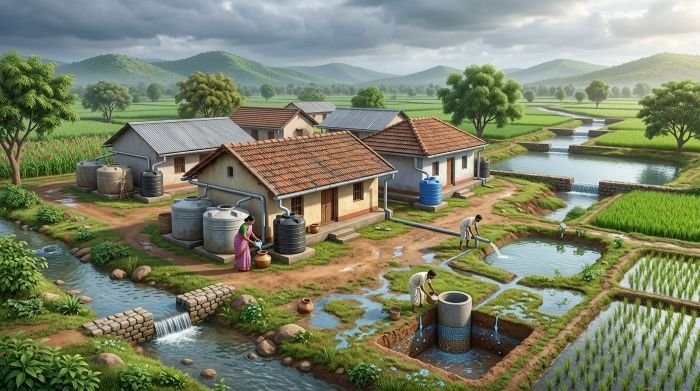
Scroll Down to Downlaod India Water Resources PDF
I Fill in the blanks with suitable words:
- The Sorrow of West Bengal was Damodar
- The Sorrow of Bihar was Kosi
- Biggest irrigation project of Karnataka is Upper Krishna Project.
- Pampa Sagara Dam is in Vijayanagar district of Karnataka.
- Hirakud Project is built across the Mahanadi
II. Answer the following questions in brief:
Question 1.
What is irrigation? What are the types of irrigation?
Answer:
The artificial supply of water for the purpose of agriculture is called irrigation. It refers to the supply of water to agricultural land from rivers, reservoirs, tanks or from underground sources. The important types of irrigations in India are wells, canals and tanks. Recently other types of irrigations such as sprinkler and drip irrigation have been introduced.
Question 2.
What is multi-purpose river valley project? What are its objectives?
Answer:
The river valley projects that provide multiple benefits are called multi-purpose river valley projects. They provide water for irrigation, control floods, generate hydro-electric power and serve other purposes.
Question 3.
Name the hydro-electric power projects of Karnataka.
Answer:
Shivanasamudra, Tungabhadra, Jog, Bhadra, Alamatti, Kali, Supa, Kadra and Kodasalli Dam.
Question 4.
‘Rain water harvesting is compulsory today’. Why?
Answer:
Rainwater harvesting is essential because rainfall is seasonal and unevenly distributed. It helps conserve water, recharge groundwater, reduce water scarcity and provide water during summer and droughts.
Question 5.
What is National Power Grid?
Answer:
The National Power Grid is a network that transfers surplus electricity from states with excess power to states facing a shortage of electricity.
III. Match the following
- Bhakra Dam — d. Govinda Sagar
- Tungabhadra Dam — c. Pampa Saga
- Almatti Dam — a. Lal Bahadur Shastri Sagar
- Narayanapura Dam — b. Basava Sagar
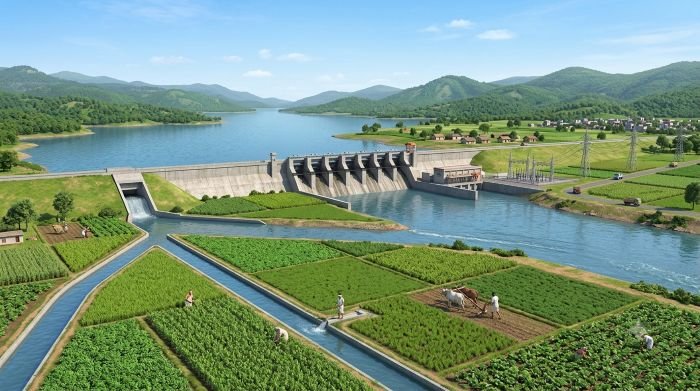
Additional Questions and Answers
Answer the following questions in brief
Question 1.
Why is water an important natural resource?
Answer:
Water is essential for irrigation, hydro-electric power generation, industries, domestic use, transportation and fisheries.
Question 2.
What are the main sources of water?
Answer:
The main sources are surface water, such as rivers and lakes, and groundwater, such as wells and springs.
Question 3.
Why is irrigation necessary in India?
Answer:
Irrigation is necessary because rainfall in India is seasonal, uncertain, unreliable and unevenly distributed.
Question 4.
What are the two types of wells used for irrigation?
Answer:
The two types are open wells and tube wells.
Question 5.
What are flood canals?
Answer:
Flood canals are canals that draw water directly from rivers when the river level is high, without the help of dams.
Question 6.
What are perennial canals?
Answer:
Perennial canals receive water stored in reservoirs behind dams constructed across rivers.
Question 7.
What is tank irrigation?
Answer:
Tank irrigation is the practice of storing water by constructing small bunds across streams and supplying it to agricultural fields.
Question 8.
Why is the Damodar River called the ‘Sorrow of Bengal’?
Answer:
The Damodar River is called the ‘Sorrow of Bengal’ because it caused large-scale destruction to life and property through floods.
Question 9.
What is the main objective of the Kosi Project?
Answer:
The main objective of the Kosi Project is to prevent floods in Bihar.
Question 10.
Why was the Hirakud Project constructed?
Answer:
The Hirakud Project was constructed across the Mahanadi River to control floods, provide irrigation and generate hydro-electric power.
Question 11.
Name the states that jointly undertook the Tungabhadra Project.
Answer:
Karnataka and Andhra Pradesh jointly undertook the Tungabhadra Project.
Question 12.
What are the reservoirs of the Upper Krishna Project called?
Answer:
The reservoirs are Lal Bahadur Shastri Sagar at Almatti and Basava Sagara at Narayanapura.
Question 13.
What is the purpose of the National Power Grid?
Answer:
The National Power Grid transfers surplus electricity from states with excess power to states facing electricity shortages.
Question 14.
What is rainwater harvesting?
Answer:
Rainwater harvesting is the collection and storage of rainwater for future use.
Question 15.
Mention two methods of rainwater harvesting.
Answer:
- Collecting rainwater from rooftops.
- Constructing bunds and check dams to collect rainwater and recharge groundwater.
Multiple-Choice Questions (MCQs)
1. Which is the most important type of irrigation in India?
a) Tank irrigation
b) Canal irrigation
c) Well irrigation
d) Drip irrigation
Answer:
c) Well irrigation
2. Which river is known as the ‘Sorrow of Bihar’?
a) Damodar
b) Kosi
c) Mahanadi
d) Krishna
Answer:
b) Kosi
3. The Damodar Valley Project is a joint project of West Bengal and ______.
a) Karnataka
b) Bihar
c) Punjab
d) Gujarat
Answer:
b) Bihar
4. The Bhakra Dam is constructed across which river?
a) Sutlej
b) Krishna
c) Mahanadi
d) Kosi
Answer:
a) Sutlej
5. The Hirakud Project is built across the ______ River.
a) Godavari
b) Krishna
c) Mahanadi
d) Tungabhadra
Answer:
c) Mahanadi
6. Pampa Sagara is the reservoir of which project?
a) Upper Krishna Project
b) Tungabhadra Project
c) Nagarjunasagar Project
d) Hirakud Project
Answer:
b) Tungabhadra Project
7. Basava Sagara is associated with which dam?
a) Bhakra Dam
b) Narayanapura Dam
c) Hirakud Dam
d) Alamatti Dam
Answer:
b) Narayanapura Dam
8. The Upper Krishna Project is located in which state?
a) Tamil Nadu
b) Kerala
c) Karnataka
d) Odisha
Answer:
c) Karnataka
9. Which project was mainly undertaken to prevent floods caused by the Kosi River?
a) Kosi Project
b) Hirakud Project
c) Bhakra-Nangal Project
d) Tungabhadra Project
Answer:
a) Kosi Project
10. Which dam is described in the chapter as the longest dam in India?
a) Bhakra Dam
b) Hirakud Dam
c) Alamatti Dam
d) Tungabhadra Dam
Answer:
b) Hirakud Dam
11. What is the main purpose of the National Power Grid?
a) To store rainwater
b) To supply electricity between states
c) To prevent soil erosion
d) To increase forest cover
Answer:
b) To supply electricity between states
12. Which of the following is a method of rainwater harvesting?
a) Deforestation
b) Rooftop rainwater collection
c) Overgrazing
d) Excessive groundwater pumping
Answer:
b) Rooftop rainwater collection
13. Which type of canal receives water from reservoirs created by dams?
a) Flood canal
b) Perennial canal
c) Irrigation well
d) Tube well
Answer:
b) Perennial canal
14. The reservoir created by the Bhakra Dam is called ______.
a) Pampa Sagara
b) Basava Sagara
c) Govind Sagar
d) Narmada Sagar
Answer:
c) Govind Sagar
15. Which of the following helps recharge groundwater?
a) Building check dams
b) Cutting trees
c) Wasting water
d) Removing tanks
Answer:
a) Building check dams