
Class 10 Social Question and Answer: India – Natural Disasters
Looking for SSLC Class 10 Social Science Studies textbook answers? You can download Chapter 10 : India – Natural Disasters Questions and Answers PDF, Notes, and Additional Q&A here. SSLC Social Science solutions follow the Karnataka State Board Syllabus, making it easier for students to revise and score higher in exams.
Karnataka SSLC Social Geography Textbook Answers—Reflections Chapter 10
India – Natural Disasters Questions and Answers, Notes, and Additional Q&A
Class 10 Geography Chapter 10
India – Natural Disasters
Scroll Down to Downlaod India – Natural Disasters PDF
I. Answer the following questions in brief:
Question 1.
What are natural disasters?
Answer:
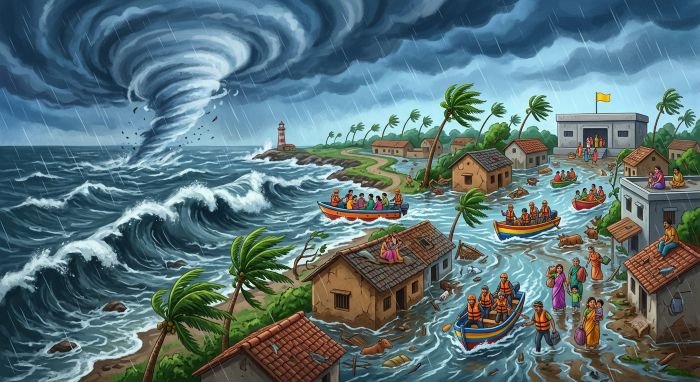
Naturally occurring destructive incidents that result in the loss of human life and property are called natural disasters. Examples are earthquakes, floods, cyclones, landslides and droughts.
Question 2.
What are the effects of cyclones?
Answer:
- Cyclones cause large-scale loss of human life.
- Ocean tides inundate inland areas and make water bodies salty.
- Crops are destroyed.
- Transport, electricity supply and daily life are badly affected.
- Infectious diseases spread in cyclone-hit areas.
Question 3.
What are floods?
Answer:
When heavy rainfall or excessive melting of ice increases the volume of water in rivers, causing them to overflow and occupy low-lying areas, it is called a flood.
Question 4.
What is a Landslide?
Answer:
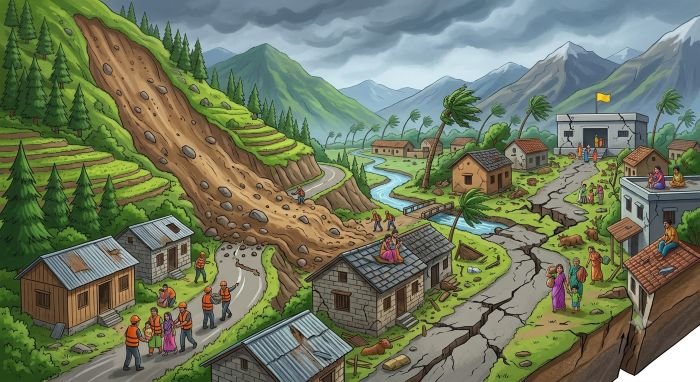
The sliding of land masses down the slopes of mountains or hills, along with stones, mud and debris, is called a landslide.
Question 5.
What is an Earthquake?
Answer:
The vibration or movement of the upper layers of the earth due to pressure created inside the earth is called an earthquake.
Question 6.
What are the causes of floods? Describe flood-prone areas in India.
Answer:
Causes of floods:
- Heavy and uncertain monsoon rainfall.
- Accumulation of silt in rivers.
- Breach of dams and retention walls.
- Rivers changing their courses.
- Heavy rainfall during cyclones.
- Earthquakes in the sea.
- Deforestation and illegal encroachment.
Flood-prone areas in India:
- Ganga, Yamuna, Gandak, Kosi and Ghagra cause floods in Uttar Pradesh and Bihar.
- Damodar and Suvarnarekha cause floods in Chhattisgarh and West Bengal.
- Brahmaputra and its tributaries cause floods in Assam.
- Cloudbursts cause floods in Jammu and Kashmir, Himachal Pradesh and Sikkim.
- Narmada, Tapti, Sabarmati and Mahi cause floods in Gujarat.
- Krishna, Tungabhadra, Ghataprabha, Malaprabha and other rivers cause floods in Karnataka.
Question 7.
What is Coastal Erosion? Mention its management.
Answer:
The erosion of coastal land by sea waves is called coastal erosion.
Management:
- Prohibiting sand mining in coastal areas.
- Constructing retention walls along the coast.
- Placing large rocky boulders along the coast.
- Growing mangrove forests along the coast.
Question 8.
Write about the effects of the earthquake and precautions to be taken.
Answer:
Effects of earthquakes:
- Loss of human life and destruction of property.
- Obstruction to transport.
- Spread of infectious diseases.
- Increased tidal activity and tsunamis.
- Changes in the direction of rivers.
Precautions:
- Restricting the construction of multi-storied buildings in earthquake-prone areas.
- Using lightweight materials for house construction.
- Constructing houses to ensure stability.
- Providing basic amenities to affected areas.
- Disconnecting power supply during an earthquake.
III. Additional Important Questions and Answers
Question 1.
Mention any four natural disasters.
Answer:
Earthquakes, floods, cyclones and landslides are four examples of natural disasters.
Question 2.
What are the causes of cyclones?
Answer:
Cyclones are caused by intense heating of ocean water, which produces humid and unstable air masses. They commonly originate in the Bay of Bengal.
Question 3.
Mention the preventive measures of cyclones.
Answer:
- Evacuating people from low-lying areas.
- Keeping food, drinking water and medicines ready.
- Providing transport and medical facilities.
- Informing people about cyclone movements.
- Keeping rescue teams ready.
Question 4.
What are the effects of floods?
Answer:
- Loss of human life, houses and property.
- Destruction of crops and fertile soil.
- Damage to transport and electricity facilities.
- Spread of dangerous diseases due to stagnant water.
Question 5.
Mention the causes of landslides.
Answer:
- Heavy rainfall and flowing water.
- Construction of roads, railways and canals on steep slopes.
- Mining activities.
- Deep ploughing of slopes.
Question 6.
Mention the effects of coastal erosion.
Answer:
- Coastal land gets submerged into the sea.
- Houses and other properties are damaged.
- People living in coastal areas may lose their homes and land.
Question 7.
What are the causes of earthquakes?
Answer:
- Increase in pressure inside the earth.
- Movement of magma.
- Ubranisation
- Deforestation
- Construction of dams and mining activities.
III. Multiple Choice Questions (MCQs)
- Which natural disaster is caused by the movement of the earth’s upper layers?
A) Flood
B) Cyclone
C) Earthquake
D) Drought
Answer:
C) Earthquake - Cyclones commonly originate in the ______.
A) Arabian Sea
B) Bay of Bengal
C) Indian Ocean
D) Red Sea
Answer:
B) Bay of Bengal - Which season experiences more coastal erosion along India’s west coast?
A) Winter
B) Summer
C) South-west monsoon
D) Spring
Answer:
C) South-west monsoon - Which river causes floods in Assam?
A) Krishna
B) Brahmaputra
C) Narmada
D) Mahi
Answer:
B) Brahmaputra - Which of the following helps prevent coastal erosion?
A) Deforestation
B) Sand mining
C) Growing mangrove forests
D) Cutting trees
Answer:
C) Growing mangrove forests - The sliding of land masses down mountain slopes is called ______.
A) Flood
B) Landslide
C) Cyclone
D) Earthquake
Answer:
B) Landslide - Which of the following is a man-made cause of floods?
A) Heavy rainfall
B) Cloudburst
C) Deforestation
D) Snow melting
Answer:
C) Deforestation - Which of these rivers causes floods in Karnataka?
A) Tungabhadra
B) Yamuna
C) Brahmaputra
D) Ghagra
Answer:
A) Tungabhadra - Which of the following is a preventive measure against floods?
A) Deforestation
B) Constructing bunds along rivers
C) Removing dams
D) Encroaching riverbanks
Answer:
B) Constructing bunds along rivers - Which state experienced the destructive Kedarnath floods in 2013?
A) Karnataka
B) Gujarat
C) Uttarakhand
D) Kerala
Answer:
C) Uttarakhand - Which months experience cyclones more frequently in India?
A) January–February
B) October–November
C) July–August
D) March–April
Answer:
B) October–November - Which cyclone originated in 2007?
A) Gonu
B) Nisarga
C) Nilofer
D) Laila
Answer:
A) Gonu - Which river caused the destructive Kedarnath floods in 2013?
A) Krishna
B) Mandakini
C) Godavari
D) Kaveri
Answer:
B) Mandakini - Accumulation of ______ in rivers can cause floods.
A) Sand dunes
B) Silt
C) Rocks
D) Minerals
Answer:
B) Silt - Which of the following rivers causes floods in Gujarat?
A) Mahi
B) Kosi
C) Ghagra
D) Brahmaputra
Answer:
A) Mahi - Which of the following is commonly found along with landslides?
A) Stones, mud and debris
B) Snow only
C) Sea water
D) Sand dunes
Answer:
A) Stones, mud and debris - Which state is severely affected by coastal erosion along the west coast?
A) Punjab
B) Haryana
C) Kerala
D) Rajasthan
Answer
C) Kerala - Which of the following activities can cause landslides?
A) Afforestation
B) Mining
C) Rainwater harvesting
D) Planting trees
Answer:
B) Mining - Which of the following is an important precaution in earthquake-prone areas?
A) Constructing unstable buildings
B) Using lightweight construction materials
C) Cutting down trees
D) Building on steep slopes
Answer:
B) Using lightweight construction materials - Which organisation is responsible for selecting cyclone names in India under the regional naming arrangement?
A) ISRO
B) IMD
C) RBI
D) DRDO
Answer:
B) IMD